
Davidson County Supervision Types
North Carolina uses three terms that sound similar but arise in different ways. Probation is ordered by a court and permits a person to remain in the community under stated conditions. It may replace an active prison term or follow a short confinement condition. A Davidson County probationer may never have entered an NCDAC prison. Parole is discretionary early release for eligible prison sentences, chiefly those governed by older sentencing law. Post-release supervision, often shortened to PRS, is the mandatory community portion that follows many felony prison terms under structured sentencing.
| Status | How it begins | Best public check | What release means |
|---|---|---|---|
| Probation | A Davidson County court order | NCDAC Offender Public Information and the court file | The person may not have served a state-prison term |
| Parole | A Commission decision for an eligible older-law sentence | NCDAC status and Commission material | Prison custody ended, but supervision continues |
| Post-release supervision | The community portion of a structured felony sentence | NCDAC inmate and supervision status fields | Release from prison does not end correctional control |
These distinctions matter when reading a released record. NCDAC separates “Inmate Status” from “Probation/Parole/Post Release Status.” An inactive inmate status paired with active PRS supports a narrow conclusion: NCDAC no longer reports prison custody, while state supervision remains active. It does not show that every court duty or hold has ended. If both fields are inactive, NCDAC reports neither active prison custody nor active community supervision, subject to identity and update limits.
Check Davidson County Post-Release Status
Use the NCDAC Offender Public Information search for a person who has entered North Carolina state correction or Community Supervision. It does not cover every Davidson County Jail booking. A local release on bond may leave a sheriff and court trail without any NCDAC record. Start with custody type, then search with an offender number whenever one is known.
- Open Offender Public Information and choose a broad status filter if the present status is uncertain.
- Enter the seven-digit offender number, or use name fields and suitable refiners.
- Compare date of birth, physical descriptors, conviction county, docket, and offender number before selecting a match.
- Read “Inmate Status” and “Probation/Parole/Post Release Status” separately.
- Review sentence history, supervision dates, and any location or movement field in context.
- Record the query date and the exact field labels, then call the official office if a public entry is unclear.
The search form also supports surname sounds-like matching, middle initial, gender, race, ethnic group, exact or ranged birth dates, and age range. Start broad enough to catch a spelling variation, then narrow by a stable identifier. A name alone is weak proof. An “inactive” label must be tied to the field it describes, because inactive prison custody and inactive supervision are separate facts.
For a county-jail-only case, use the Davidson active list to check present local custody, the filed court order for the legal basis, and the sheriff custody record for physical departure. The Davidson County released inmate search guide explains that local path. NCDAC becomes relevant only if a state sentence, probation, parole, PRS, or state transfer is supported by the record.
Davidson County District 22 Office
Davidson County is assigned to NCDAC Community Supervision District 22, which also includes Alexander, Davie, and Iredell counties. Use the live Community Supervision district directory because assignments can change. Do not rely on an individual officer’s name from an old page or copied listing.
Community Supervision District 22
507-C West Center Street
Lexington, NC 27292
336-249-9332
Fax: 336-249-2168
NCDAC Community Supervision
2020 Yonkers Road
MSC 4250
Raleigh, NC 27699-4250
919-716-3100
When calling District 22, provide the NCDAC number and ask whether the public OPI status is current, which official office serves the case, and how to report a demonstrable error. Staff may not disclose confidential case notes. The useful goal is to verify public basics and reach the correct office, not to request an unrestricted supervision file.
The official Community Supervision overview shows how NCDAC describes probation, parole, and PRS. The captured official page below illustrates that state-level starting point.
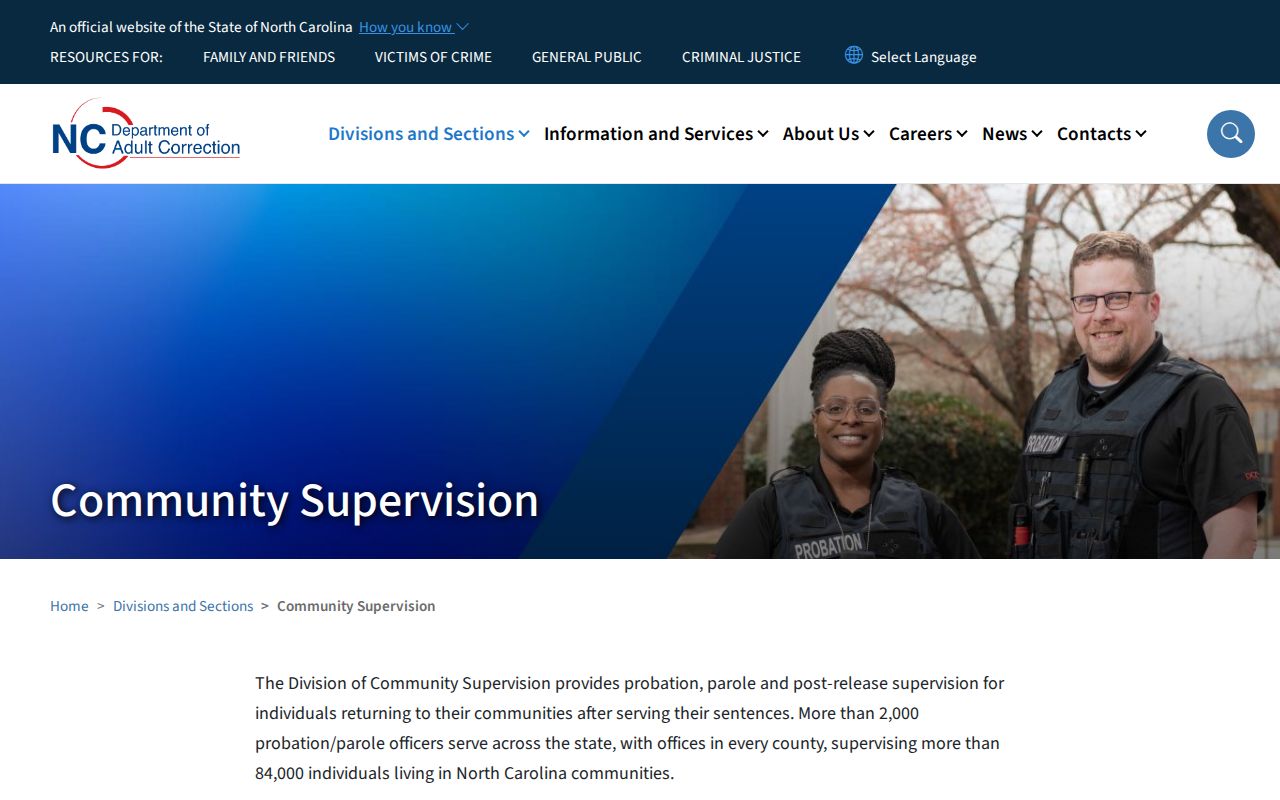
Use those definitions to interpret the person-specific OPI fields, then use District 22 for a Davidson assignment question.
Davidson County Absconder Status
NCDAC maintains a separate official absconder search. Check it only when the supervision question calls for it. An entry means NCDAC reports an alleged failure to remain in contact or comply with supervision. It does not, by itself, mean the person is now in jail, has a new conviction, or has experienced another release event.
Resolve the present status through the right channel. Check Davidson County’s active inmate list for current local jail custody. Review OPI for the supervision record. Contact District 22 about a stale or unclear state status. No separate Davidson County Sheriff public warrant list was found in the research, so a missing name on the active jail list cannot settle a warrant or absconder question.
The official lookup’s layout is shown in this NCDAC absconder-search capture.
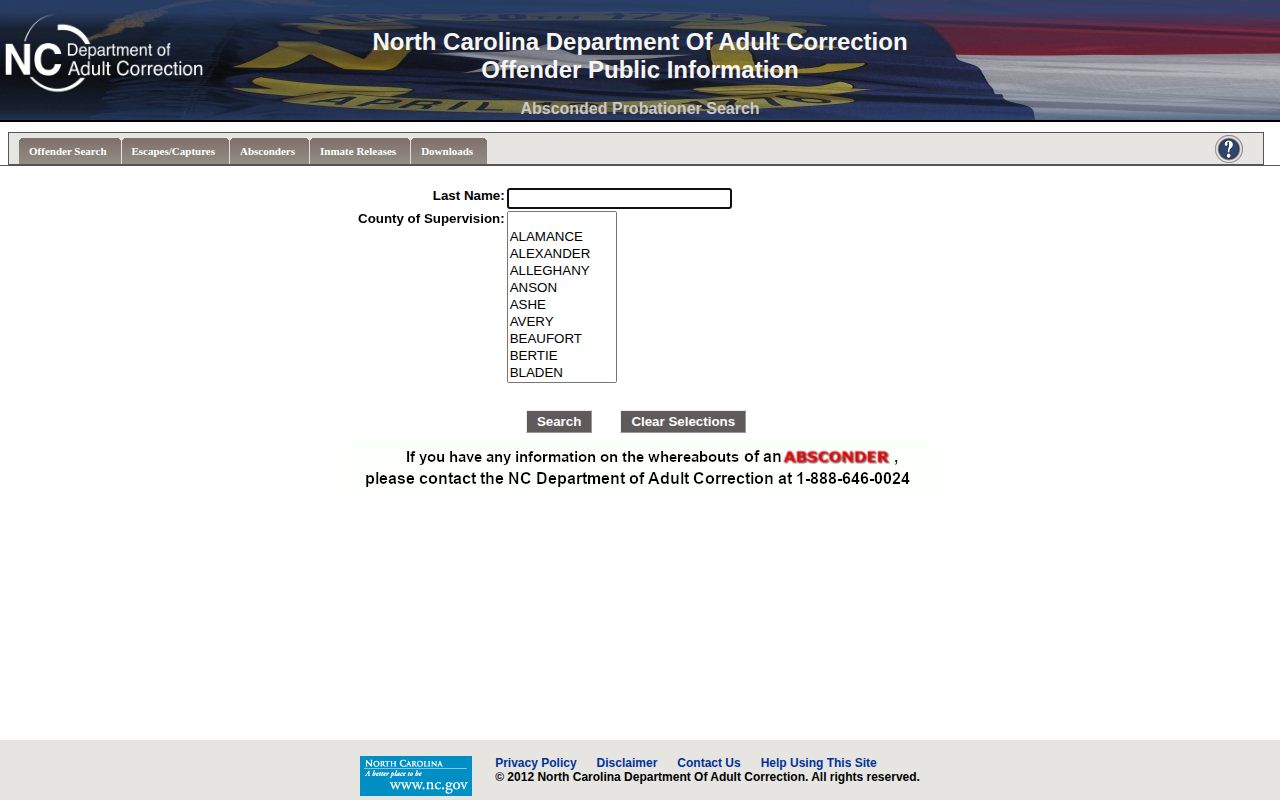
Search results need the same identity checks as ordinary OPI results. A label should be quoted exactly and tied to NCDAC as the reporting source.
Davidson County State Reentry Paths
Davidson County contains two state-system settings that can be mistaken for county jail operations. Davidson Correctional Center is an NCDAC minimum-custody prison and designated reentry facility for men near state release. Lexington also hosts North Piedmont Confinement in Response to Violation Center, known as a CRV center. Neither is the Davidson County Jail, even though each is in the county.
A CRV is a confinement response for qualifying technical supervision violations. Research describes it as a 90-day state Community Supervision response. Completing that confinement ordinarily returns the person to the community-supervision case; it does not necessarily discharge the supervision term. Verify the NCDAC record and the supervising office instead of treating CRV departure as a county-jail release.
For Davidson Correctional Center, use NCDAC OPI and the state Inmate Release Search. Read Last Movement with current location and status because a transfer to another prison continues custody. If PRS or parole becomes active after release, District 22 can be the local verification route. This facility-specific split is central to accurate Davidson County parole and probation research.
Davidson County Parole Review Records
Ordinary North Carolina parole review is not a conventional formal hearing where commissioners meet personally with the person. The Commission describes a file-review and independent-vote process. As a result, there is no ordinary public individual hearing calendar to search. The closest recurring public source is the monthly Discretionary Parole Reviews index, published from September 2024 forward as observed in the research.
Terms such as incomplete decision and suspend decision have specific meanings. An incomplete decision can reflect a need for more information, evaluation, or investigation. A suspended decision stops consideration at that time. Eligibility and review do not promise release, and some reasons or Commission records may remain confidential. Offense date and sentencing law control whether discretionary parole is relevant at all.
The monthly index shown in this official Commission capture is a better public reference than an invented hearing schedule.
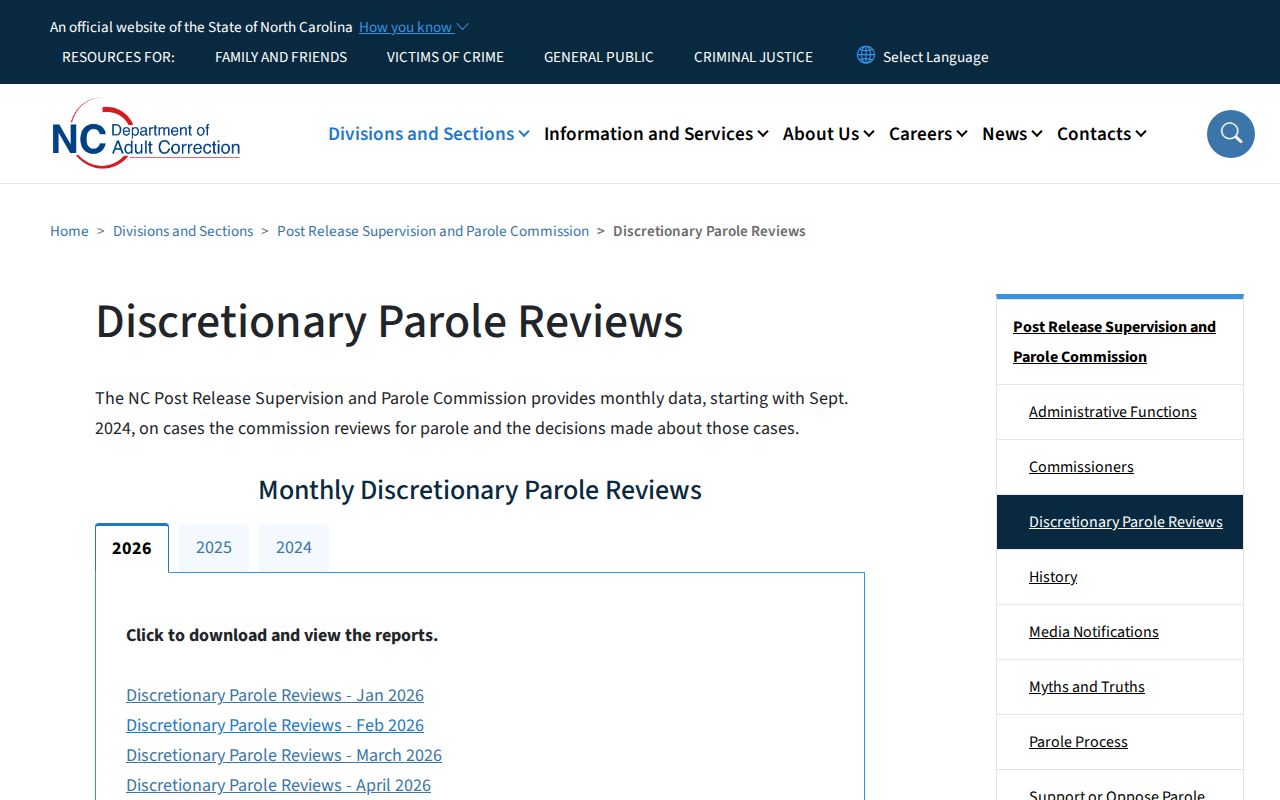
After a release decision, use the person’s NCDAC status and sentence history to distinguish the decision from the completed custody event.
Davidson County Supervision Discharge
Release from prison and discharge from supervision are separate milestones. A prison actual release date may start parole or PRS. The supervision term ends only when the responsible authority records termination or discharge. For probation, the court file can also contain an order modifying, revoking, or terminating the case. Preserve the precise agency and field rather than using “released” for every stage.
When sources conflict, identify the exact claim first. Ask whether the person left prison, began supervision, completed supervision, entered CRV confinement, or moved to another custodian. Then favor a filed order and the current custodian or supervising agency record over an old screenshot or search snippet. Save the offender number, field label, date, agency, and access time. That record trail makes a later status change understandable.
A SAVAN custody notice can add a time-sensitive agency event, but it does not replace the NCDAC supervision record. State policy distinguishes projected release, release with supervision, and release without supervision. The NC SBI registry is narrower still. Its neighborhood alerts concern address changes for covered registrants, not an ordinary probation, parole, or PRS discharge. Keep each alert tied to the system that issued it.
If a Davidson court order and OPI appear inconsistent, obtain the filed order and give District 22 the offender number. Ask how to report a verifiable data error without requesting confidential notes. This approach preserves both sources: the court explains legal authority, while NCDAC reports execution and current state supervision.